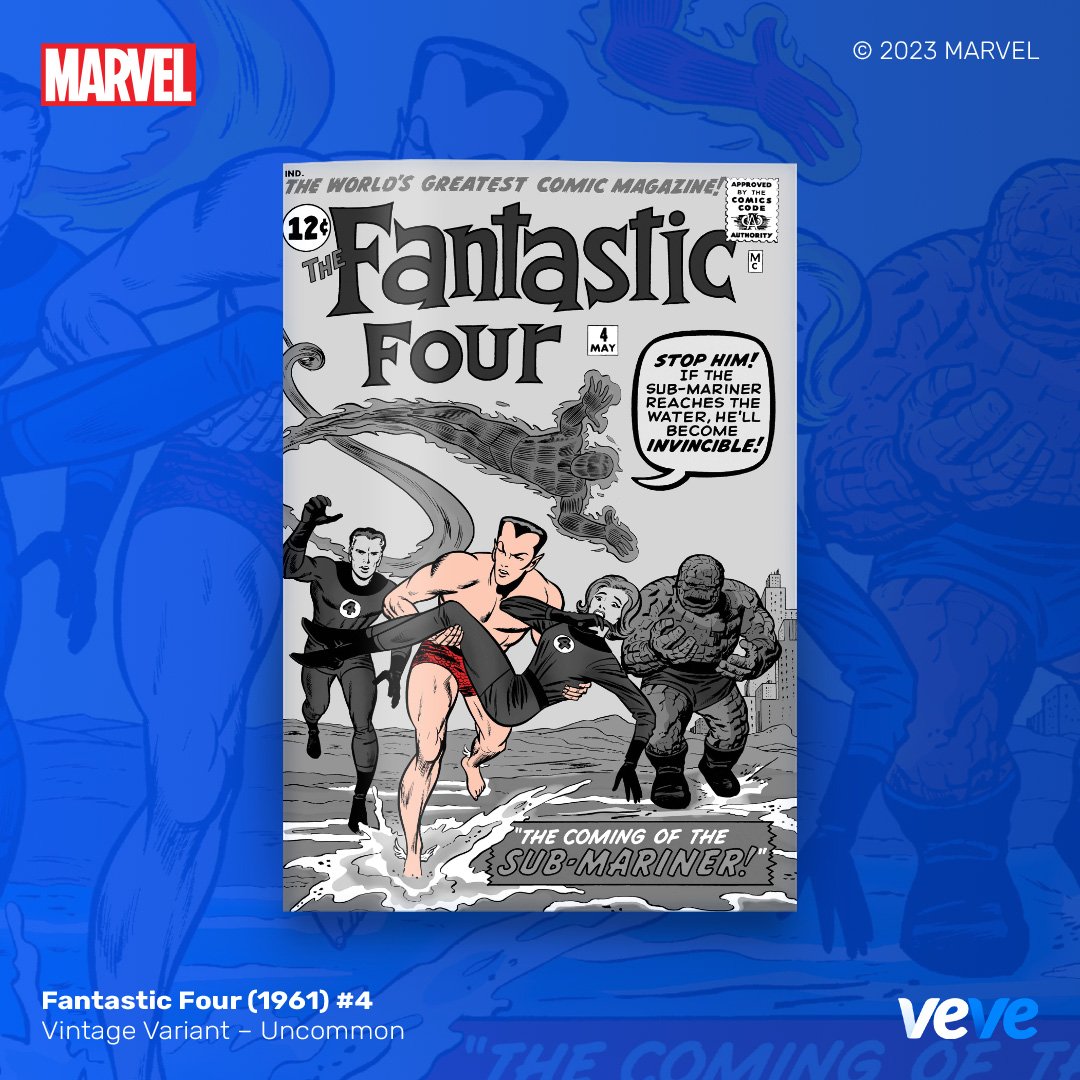
So, you’ve set your sights on a bona fide Silver Age legend: Fantastic Four #4. This isn't just another comic book; it's a vibrant slice of Marvel history, a key stepping stone in the saga of the world’s first superhero family, and, crucially, the triumphant return of a certain aquatic anti-hero. Diving into the nuances of collecting Fantastic Four #4: Value & Rarity means understanding its unique place in comic lore, recognizing the factors that drive its desirability, and knowing precisely what to look for—and look out for.
This guide will equip you with the insights you need to navigate the exciting, sometimes daunting, world of high-value comic collecting, ensuring you make informed decisions worthy of such an iconic issue.
At a Glance: Fantastic Four #4 (1962) – The Collector's Essentials
- Significance: First Silver Age appearance of Namor, the Sub-Mariner.
- Creators: Written by Stan Lee, art by Jack Kirby – a true dream team.
- Publication Date: March 1962.
- Value Driver: Historical importance, iconic character return, relatively low surviving print run from the early 1960s.
- Rarity: Moderate to high, especially in higher grades. Finding a truly "mint" copy is exceedingly rare.
- Key Consideration: Condition is paramount; even slight grade changes can dramatically impact value.
A Tale of Two Fantastic Four #4s: Clarifying the Collector's Quest
Before we dive deep, let's clear up a common point of confusion. When serious collectors talk about the "value and rarity" of Fantastic Four #4, they are almost exclusively referring to the landmark issue from March 1962, featuring the first Silver Age appearance of Namor the Sub-Mariner. This is the holy grail.
However, the comic landscape is vast, and numbering can sometimes be reused. You might encounter information about a different "Fantastic Four #4" published much later. For instance, there's a Modern Age Fantastic Four #4 from February 1997, part of a rebooted series. This issue, with a cover price of $1.95 and featuring creators like Brandon Choi, Jim Lee, and Scott Williams, is a completely distinct comic. It's a fine book in its own right, showcasing a "Heart of Darkness" story arc, but it does not carry the same historical weight or market value as its 1962 predecessor. Its UPC (75960604361300411) and modern era designation clearly set it apart.
For the purpose of this guide – and for any collector genuinely interested in significant value and rarity – our focus will be squarely on the original, seminal Fantastic Four #4 from 1962. Let’s explore why it commands such respect.
Why Fantastic Four #4 (1962) Matters: A Silver Age Cornerstone
The early 1960s were a golden era for Marvel Comics, a period of explosive creativity that laid the groundwork for the universe we know today. Fantastic Four #4, published in March 1962, stands as a critical pillar of this era.
At its heart, this issue marks the triumphant first Silver Age appearance of Namor, the Sub-Mariner. Namor was a Golden Age icon, a character with a rich history, and his reintroduction by Stan Lee and Jack Kirby was a masterstroke. His return bridged the gap between comic book eras, signaling that Marvel was building a universe where history mattered and beloved characters could reappear with renewed vigor. This wasn't just a cameo; it was a powerful statement about the depth and interconnectedness of their nascent universe. The Fantastic Four, already trailblazers, gained a complex, powerful, and often antagonistic figure to contend with, enriching their narrative tapestry immeasurably.
Beyond Namor, the issue itself is a testament to the unparalleled creative synergy of Stan Lee and Jack Kirby. Lee’s vibrant storytelling and Kirby’s dynamic, groundbreaking artwork made the Fantastic Four a sensation. Every page of FF #4 crackles with the energy and innovation that defined their partnership, pushing the boundaries of what comic books could be. For many, it represents the purest form of Silver Age Marvel, a direct line to the genesis of modern superhero storytelling.
Deconstructing Value: What Makes Fantastic Four #4 So Desirable?
When we talk about the "value" of a comic like Fantastic Four #4, we're really discussing a confluence of factors that ignite collector demand and drive market prices. It's more than just age; it's a careful balance of history, scarcity, and condition.
- Historical Significance: As discussed, the first Silver Age appearance of Sub-Mariner is monumental. Key first appearances, especially of enduring characters, always command premium prices. It's a "pedigree" issue that every serious Marvel collector wants in their longbox.
- Rarity (True Scarcity): While not a "Golden Age" comic, FF #4 is still an early Silver Age issue. Print runs for comics in the early 1960s were significantly smaller than later decades, and the survival rate of these paper treasures, especially in good condition, is notoriously low. Many were read, discarded, or damaged beyond repair.
- Demand: The Fantastic Four remain iconic, and Namor has seen resurgences in popularity, including recent cinematic appearances. This sustained, multi-generational interest keeps demand for key issues like #4 consistently high. It's a foundational piece for any Marvel collection.
- Condition (The Ultimate Decider): This is where value swings wildly. An FF #4 in high grade (say, 8.0 or higher) is a vastly different beast financially from one in low grade (2.0 or lower), even if both are legitimate copies. The difference can be tens of thousands of dollars. We'll delve into this more, but understand that every crease, tear, or missing staple shaves off value.
Understanding Rarity: The Scarcity Factor
The concept of rarity in comic books isn't just about how many copies were originally printed; it's about how many survived and, more importantly, how many survived in collectible condition.
- Estimated Print Runs: While exact figures for 1960s Marvel comics are hard to come by, industry estimates suggest print runs for popular titles like Fantastic Four were likely in the range of 150,000 to 250,000 copies per issue. Compared to modern comics that can easily top millions, this is a relatively small number.
- Survival Challenges: Imagine a comic from 1962. It was likely bought by a child, read multiple times, perhaps traded, loaned, or stored poorly. The paper quality wasn't archival, and acid deterioration is a real threat. Factors like water damage, sunlight exposure, rough handling, and general wear and tear meant that the vast majority of these comics simply didn't last.
- The "Sub-Mariner Effect": Issues featuring key character debuts or significant storyline events tend to be read more, handled more, and thus, often suffer more damage. While this makes them desirable, it also contributes to their scarcity in pristine condition.
This combination of relatively small initial print runs and poor survival rates is what makes finding a high-grade copy of Fantastic Four #4 a genuine challenge and a testament to its rarity.
The Grading Game: Unlocking True Value
For a comic as significant as Fantastic Four #4, professional third-party grading is not just recommended; it's practically mandatory for establishing true market value. Companies like CGC (Certified Guaranty Company) and CBCS (Comic Book Certification Service) provide an unbiased assessment of a comic’s condition, encapsulate it in a tamper-evident slab, and assign a definitive numerical grade (on a 0.5 to 10.0 scale).
- Why Grade?
- Authentication: Verifies the comic's authenticity and identifies any hidden restoration.
- Condition Assessment: Provides an objective, standardized grade, removing subjective arguments about a book's state.
- Preservation: The slab protects the comic from further handling damage and environmental degradation.
- Increased Value: Graded comics consistently fetch higher prices than raw (ungraded) copies, especially for key issues.
- Key Grading Factors: Graders meticulously examine every aspect:
- Cover: Creases, folds, tears, color fading, gloss retention, staple rust, spine stress, ink loss.
- Pages: Brittleness, tanning, tears, pieces missing, stains, interior quality.
- Staples: Rust, detachment, tears around the staples.
- Centering: How well the cover image is aligned on the page.
- Overall Eye Appeal: The general presentation of the comic.
- Understanding the Scale: Even a half-point difference can mean thousands of dollars for FF #4. A 9.0 (Very Fine/Near Mint) is incredibly rare and expensive, while a 6.0 (Fine) is still highly collectible and valuable. Even a 2.0 (Good) can command a significant price for this particular issue.
Learn more about professional comic book grading and how these meticulous assessments protect your investment and define a comic's worth. For an issue like Fantastic Four #4, a solid understanding of grading is your most powerful tool.
Decoding the Price Tag: What to Expect
The value of Fantastic Four #4 (1962) is highly dynamic, influenced by market demand, recent auction results, and the prevailing economic climate. While precise, real-time figures fluctuate, we can offer general insights into what you might expect across various grades. Keep in mind that these are illustrative and subject to change; always consult recent sales data from reputable auction houses and dealer networks.
- Low Grades (0.5 – 2.0 / Poor to Good): Even a heavily worn copy, as long as it's complete and unrestored, holds significant value. You might see prices in the low thousands (e.g., $2,000 - $5,000+). These are often "reader copies" or placeholders for collectors on a budget.
- Mid Grades (3.0 – 5.0 / Good to Very Good): Here, the comic is clearly used but structurally sound. Expect prices to climb into the mid-thousands to lower five figures (e.g., $5,000 - $15,000+). This range offers a good balance for many collectors seeking a decent display copy without breaking the bank for perfection.
- High Grades (6.0 – 8.0 / Fine to Very Fine): This is where the price curve steepens considerably. A Fantastic Four #4 in this range will command prices in the upper five figures (e.g., $20,000 - $50,000+). These copies are increasingly scarce and represent excellent investment pieces.
- Very High Grades (8.5 – 9.0+ / Very Fine+ to Near Mint): These are exceptionally rare and highly coveted. Prices for such pristine copies typically start in the mid-five figures and can easily soar into six figures (e.g., $50,000 - $100,000+), reaching record highs at major auctions. The jump from an 8.0 to an 8.5 or 9.0 can be monumental.
Factors Influencing Price Spikes: - Media Adaptations: A new movie or TV show featuring the Fantastic Four or Sub-Mariner can cause immediate price bumps.
- Economic Factors: General economic health, disposable income, and the perceived stability of alternative investments can all affect the comic market.
- Record Sales: A highly publicized sale of a top-grade copy can set new benchmarks and draw more attention to the issue.
It's clear that exploring comic books as an investment requires careful market analysis and a keen eye for condition. For a comic like Fantastic Four #4, patience and diligent research are crucial.
Spotting a Gem (or a Fake): Vigilance is Key
The high value of Fantastic Four #4 makes it a target for unscrupulous practices. As a collector, you must develop a critical eye to distinguish genuinely raw, unrestored copies from those that have been altered.
Understanding Restoration vs. Conservation:
- Restoration: Any process that attempts to improve the appearance of a comic by adding material, changing color, or repairing damage. This drastically reduces the value of a key issue like FF #4 unless explicitly disclosed and preferred by the buyer (which is rare for high-value Silver Age). Common restoration includes color touch-up, piece replacement, tear seals, tape removal, and even trimming edges.
- Conservation (Pressing/Cleaning): These are non-additive, non-restorative processes that aim to improve a comic's appearance without adding or removing material. A professional press can flatten creases and remove non-color-breaking bends. Dry cleaning can remove surface dirt. These are generally accepted by grading companies and can improve a comic's grade and value.
What to Look For (Red Flags): - Color Touch: Inspect areas of high wear, especially corners and spine. If the color looks too vibrant or inconsistent with the surrounding areas, it might be painted over.
- Piece Replacement: Look for subtle differences in paper texture or color where a corner or piece might have been replaced. Hold the comic up to a light source.
- Trimming: Check the edges for unusually sharp, clean cuts. Original comics often have slight variations.
- Gloss: If a very old comic has an unusually uniform, high gloss, it might have been shellacked or coated.
- Tape: Obvious tape is easy to spot, but some clever "fixes" might use archival tape blended to appear invisible.
Always buy from reputable dealers or auction houses that offer clear images and detailed descriptions, especially regarding any restoration. For an issue this valuable, a professionally graded copy is the safest bet. Tips for identifying restored or fake comics can help you protect your investment before you ever commit to a purchase.
Buying Fantastic Four #4: A Collector's Strategy
Acquiring a significant comic like Fantastic Four #4 requires a thoughtful approach. This isn't an impulse buy; it's a strategic acquisition.
- Do Your Homework (Beyond This Article): Research recent auction results, not just asking prices. Use platforms like Heritage Auctions, ComicLink, and GPA (GoCollect/ComicsPriceGuide) to see what copies in various grades have actually sold for.
- Set a Budget (and Stick to It): Decide what you're comfortable spending and what grade you can realistically target within that budget. Don't overextend yourself.
- Prioritize Condition (Within Your Budget): Always aim for the highest grade you can afford. A slightly lower grade, but complete and unrestored, is often a better long-term choice than a higher-grade copy with undisclosed restoration.
- Buy Graded (CGC or CBCS): For a key Silver Age issue, a professionally graded copy provides peace of mind regarding authenticity and condition. Avoid "raw" copies unless you are an expert grader yourself and trust the seller implicitly.
- Choose Reputable Sources: Stick to established comic dealers, major online auction houses specializing in comics, or well-known consignment services. Avoid unverified sellers on general marketplaces.
- Inspect Carefully (Even Graded Books): Examine high-resolution images. For graded books, check the slab for any damage or tampering. Read the grader notes on the label for any pressing, cleaning, or minor defects.
- Patience is a Virtue: Don't rush into a purchase. The right copy, at the right price, from the right seller, will eventually come along.
Preserving Your Piece of History
Once Fantastic Four #4 is yours, the responsibility shifts from acquisition to preservation. This isn't just a comic; it's a historical artifact that deserves meticulous care.
- Archival Storage: If your copy is raw (though again, not recommended for such a key book), immediately place it in an acid-free Mylar sleeve with an acid-free backing board. Store it vertically in a sturdy, acid-free comic box. If it's graded, the slab itself is a protective shell.
- Environmental Control: Store your comics in a cool, dry, dark environment. Avoid attics, basements, or garages where temperature and humidity fluctuate wildly. Ideal conditions are around 65-75°F (18-24°C) with 40-60% relative humidity. UV light causes paper to yellow and ink to fade, so keep comics out of direct sunlight.
- Handling with Care: Even graded slabs should be handled gently. Avoid dropping them or stacking heavy objects on top. For raw comics, handle them by the edges as little as possible, always on a clean, flat surface.
Understanding the difference between comic book restoration and conservation is vital not just for buying, but also for ensuring the longevity of your valuable acquisitions without inadvertently damaging their intrinsic value.
Common Collector Questions about Fantastic Four #4 (1962)
Here are quick answers to some frequently asked questions that surface when discussing Fantastic Four #4:
"Is Fantastic Four #4 (1962) a good investment?"
Historically, high-grade copies of key Silver Age issues like Fantastic Four #4 have proven to be strong, stable investments, often appreciating in value. However, like any collectible, market conditions can fluctuate. Its status as a foundational Marvel comic with a major character debut gives it enduring appeal and makes it a generally reliable asset within the comic market. Always approach with a collector's passion, not just a pure investor's mindset.
"How much is a raw (ungraded) copy of FF #4 worth?"
This is notoriously difficult to determine without professional grading. The value could range from a few hundred dollars for a very low-grade, incomplete, or heavily restored copy, up to several thousand for a seemingly "fine" raw copy. However, without professional authentication and grading, there's a significant inherent risk and uncertainty. A raw copy will always fetch less than its professionally graded equivalent due to this uncertainty.
"What's the 'best' grade to target for collecting?"
The "best" grade depends entirely on your budget and collecting goals.
- Budget-conscious: Aim for a 2.0-4.0; you'll have a genuine piece of history without the prohibitive cost of higher grades.
- Mid-range: A 5.0-7.0 offers a visually appealing, solid copy that holds strong value.
- High-end: If budget allows, 8.0+ is where true rarity and investment potential converge, but be prepared for significant expenditure.
Many collectors find a sweet spot in the mid-grades, getting a presentable and valuable comic without the extreme premium of near-mint issues.
Your Next Steps in the Fantastic Four Saga
Collecting Fantastic Four #4 is more than just acquiring a comic; it's embracing a piece of pop culture legacy. From the thrill of its historical significance—the return of Sub-Mariner orchestrated by the legendary Stan Lee and Jack Kirby—to the meticulous process of assessing its condition and value, every step is part of the adventure.
Remember to prioritize research, verify authenticity, and choose your acquisitions wisely. Whether you're seeking a high-grade investment or a treasured mid-grade cornerstone for your collection, the journey to owning Fantastic Four #4 is a rewarding one. Keep that passion burning, stay informed, and enjoy the unparalleled satisfaction of holding a true piece of Marvel history in your hands.
For an even deeper dive into this incredible issue and its enduring legacy, you can explore More on Fantastic Four #4. Happy hunting, True Believer!